Choosing the Right Industrial Circuit Breakers
The right circuit breaker keeps an electrical system safe. The wrong one can lead to equipment failure or safety hazards that stop operations. Choosing the right industrial circuit breakers requires more than selecting a familiar brand. Understanding what each spec means helps buyers make confident decisions before they order.
Match Voltage and Amperage Ratings to Your System
Every circuit breaker carries a voltage rating and an amperage rating. The voltage rating indicates the maximum voltage a breaker can safely handle. The amperage rating sets the threshold at which the breaker trips to stop a fault from spreading. Both numbers need to match the demands of your specific system.
A breaker with a voltage rating below your system’s operating voltage creates a real risk. It may fail to properly interrupt a fault, which can damage equipment or start a fire. Always select a breaker that meets or exceeds the system voltage.
Amperage works differently. Select a breaker rated close to the load it will carry, with enough headroom for startup surges. A rating too high means the breaker won’t trip when it should. A rating that is too low causes nuisance tripping, disrupting operations.
Know the Difference Between Breaker Types
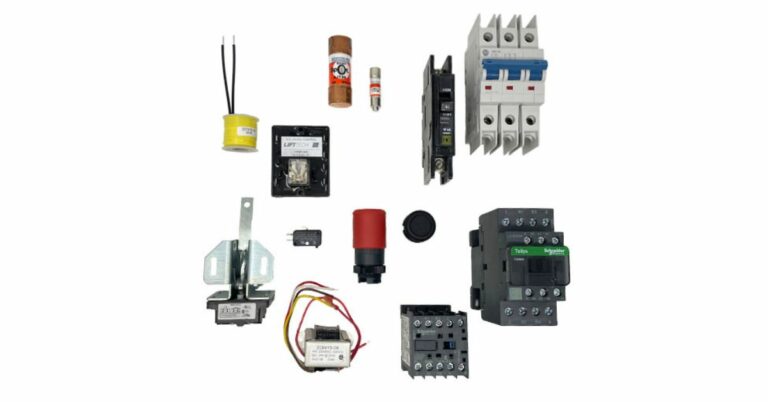
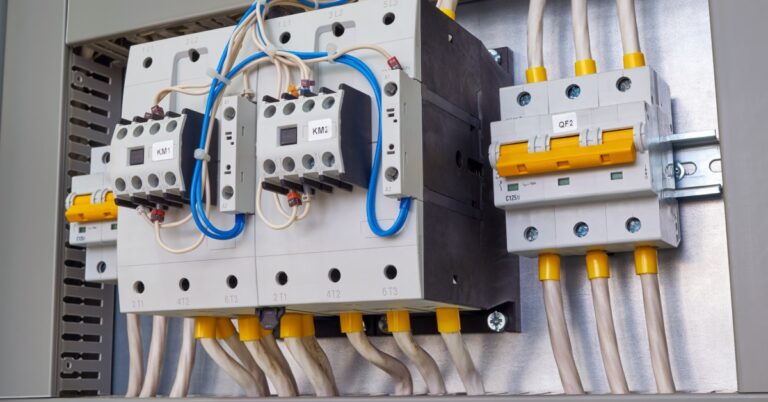
Industrial settings use several types of circuit breakers, each suited to different applications. Molded case circuit breakers (MCCBs) handle higher current loads and work well in distribution panels. Miniature circuit breakers (MCBs) are suitable for lower-current applications and protect control panels and smaller circuits.
Insulated case circuit breakers fall between MCCBs and power circuit breakers in size and capacity. Power circuit breakers serve the heaviest industrial loads and are most used in main distribution systems.
Choose the right breaker based on the fault current and the space available for installation. Check your equipment manuals and load specs to find the best match before you buy.
Don’t Overlook Interrupting Capacity
Interrupting capacity, listed as AIC (ampere interrupting capacity) on most spec sheets, indicates the maximum fault current a breaker can safely interrupt. This number needs to exceed the available fault current at the point of installation.
If a fault causes more current than the breaker can safely handle, the breaker might fail instead of stopping the problem. This can put both your equipment and people at serious risk.
The amount of fault current you get depends on the size of your transformer and how your system is wired. If you’re not sure which rating to pick, choose a breaker with a higher interrupting capacity to keep everyone safe.
Choosing the right industrial circuit breakers protects equipment and keeps systems running within safe limits. Tanooga.com stocks a wide range of industrial electrical supplies for commercial and industrial applications. Browse the online store to find the circuit breakers and components your project needs.
NOTE: The NEC (national electric code) should be used to confirm circuit breaker selection